House IK
Residence
Nagoya Aichi, Japan
Residence(Steel)
Construction area:102.40㎡
Floor area:132.49㎡
Contractor : Hirata Construction Co., Ltd.
Residence(Steel)
Construction area:102.40㎡
Floor area:132.49㎡
Contractor : Hirata Construction Co., Ltd.
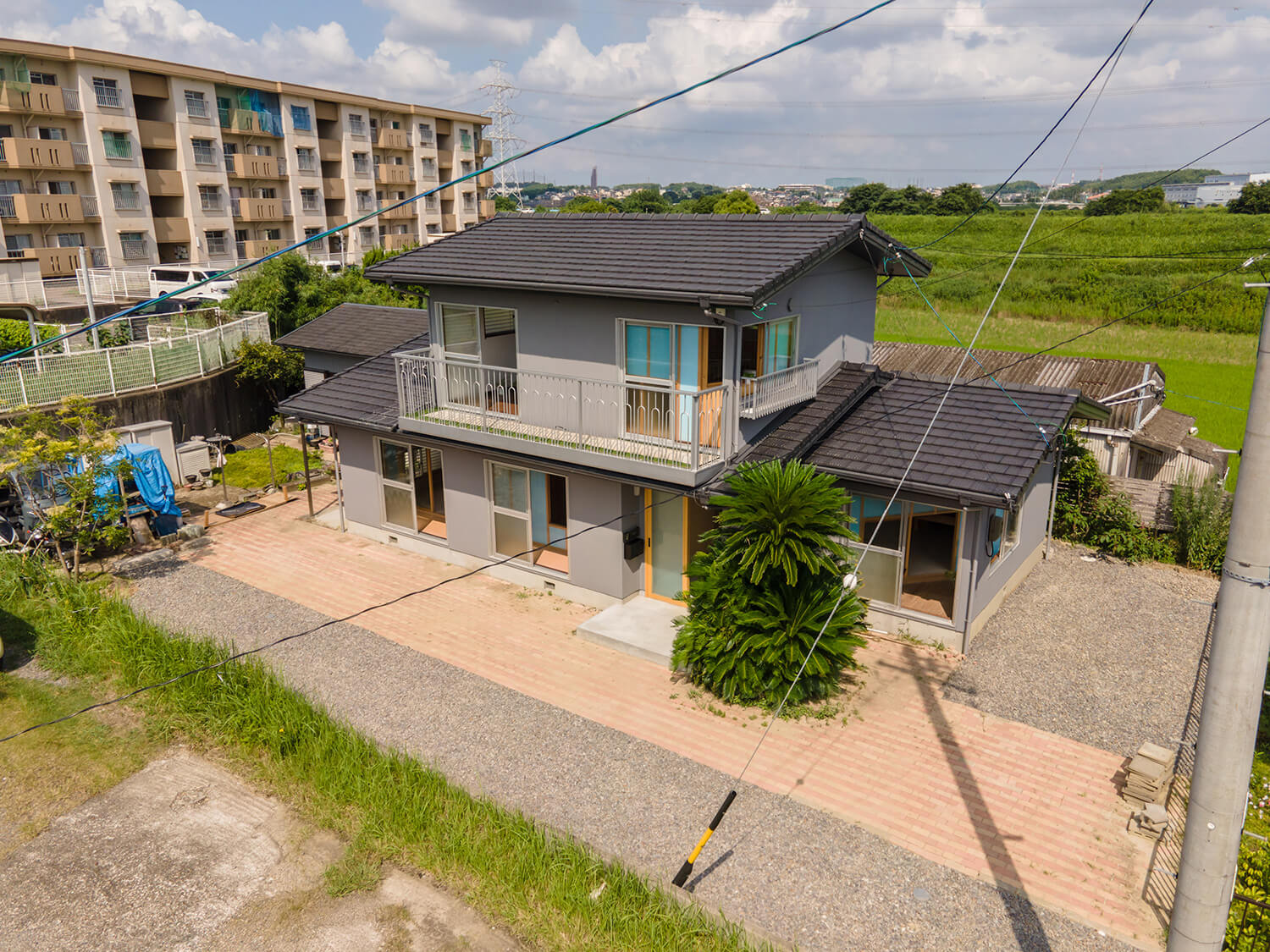
This project is a renovation of a steel-framed, government-certified standardized house constructed approximately 40 years ago in Japan.
Originally designed as a single-family dwelling, the house had come to accommodate three generations—grandparents, parents, and grandchildren. As the younger generation grew, the spatial limitations of the original plan became increasingly apparent. The clients therefore requested a transformation into a two-family residence, incorporating multiple kitchens, along with a significant improvement of thermal performance. Standardized certified houses in Japan are structurally and institutionally difficult to modify, as their approval system strictly limits the removal or reconfiguration of walls, floors, and structural elements. While demolition and reconstruction would have provided an easier solution, this project instead sought to explore whether a flexible and sustainable renovation model could be established within the existing certification framework and a limited budget—offering a potential prototype for the vast stock of similar houses across the country.
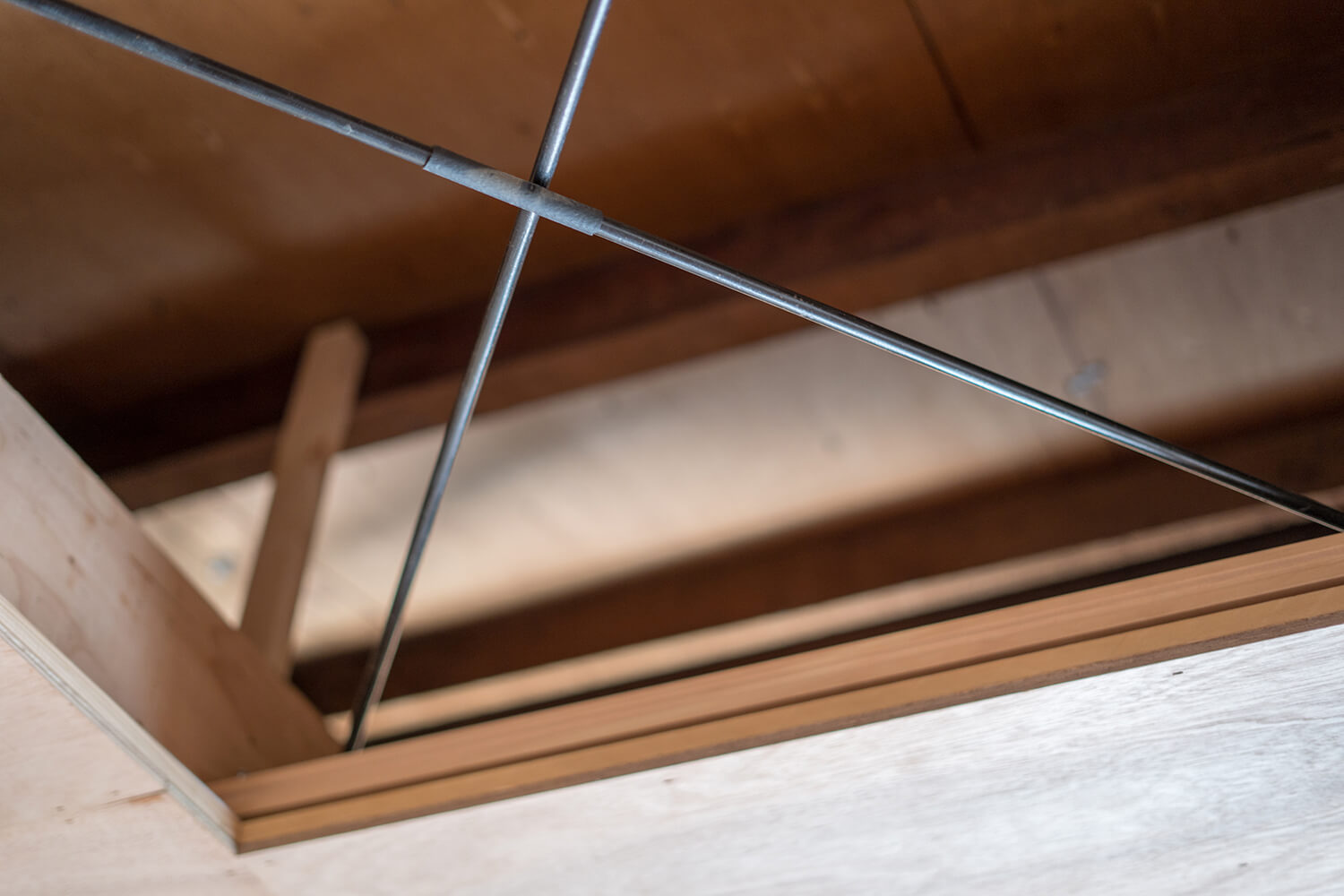
Rather than altering the primary structure, a new thermal insulation line was inserted inside the existing structural envelope. This strategy allowed performance to be upgraded while maintaining certification compliance.
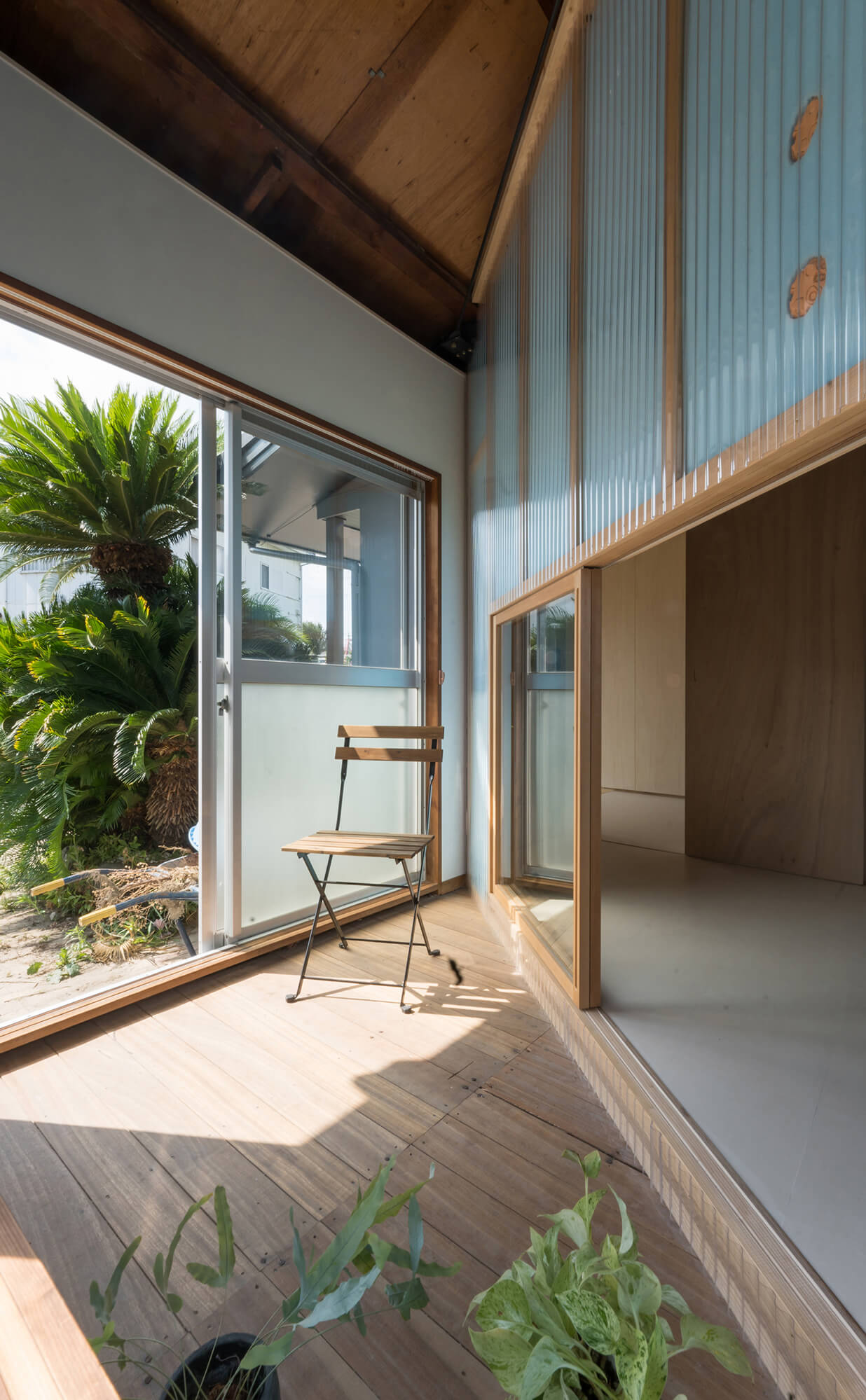
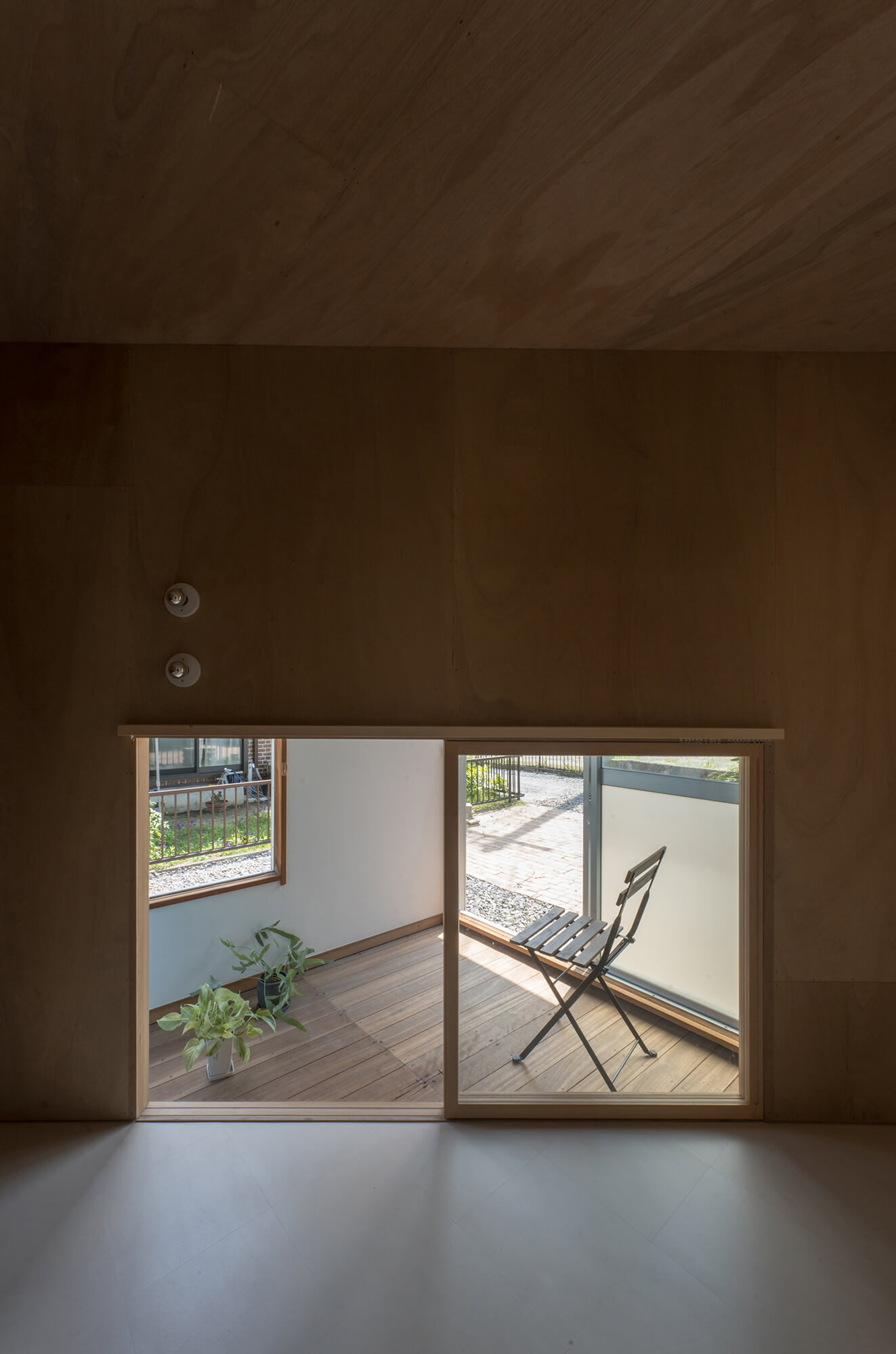
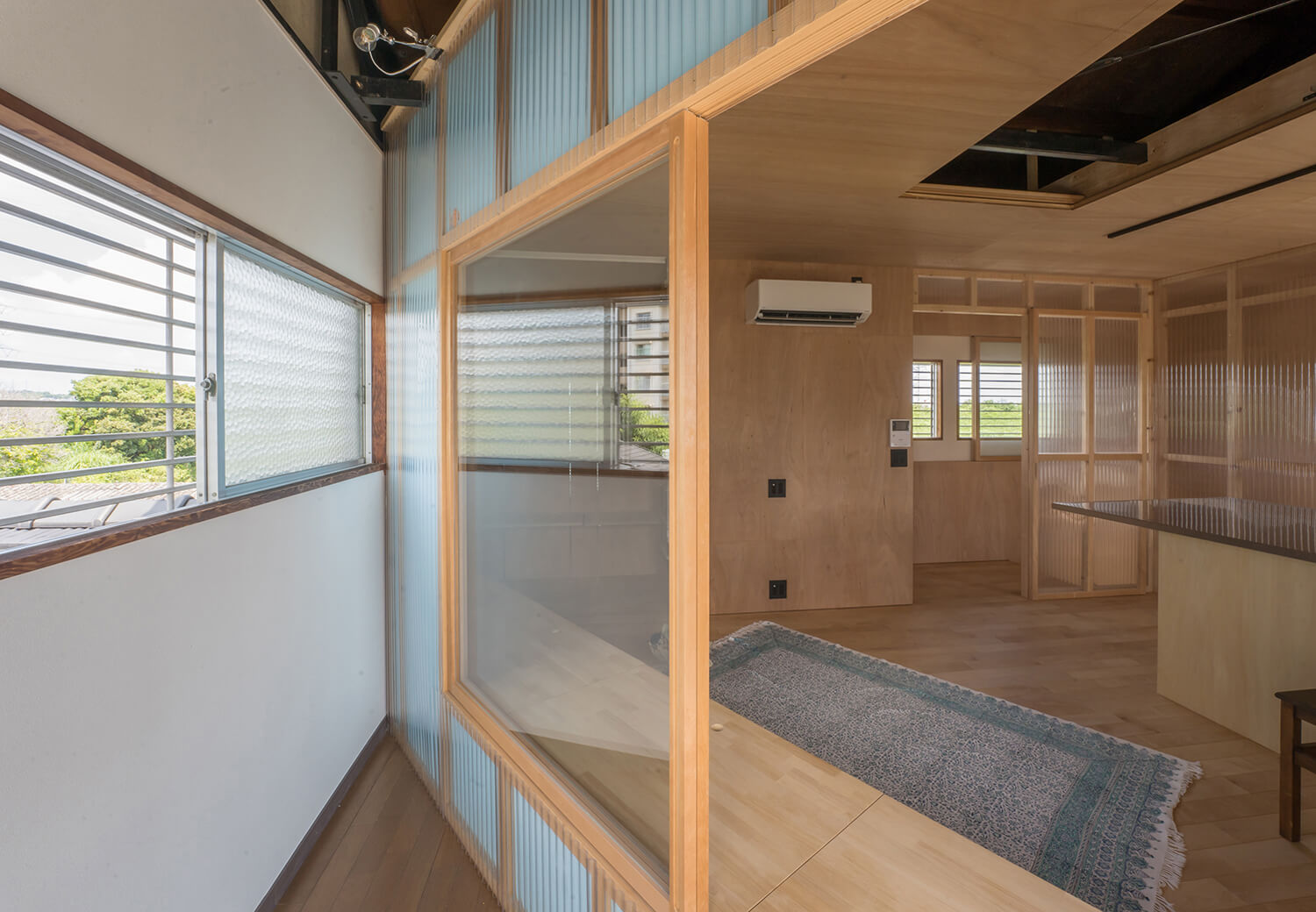
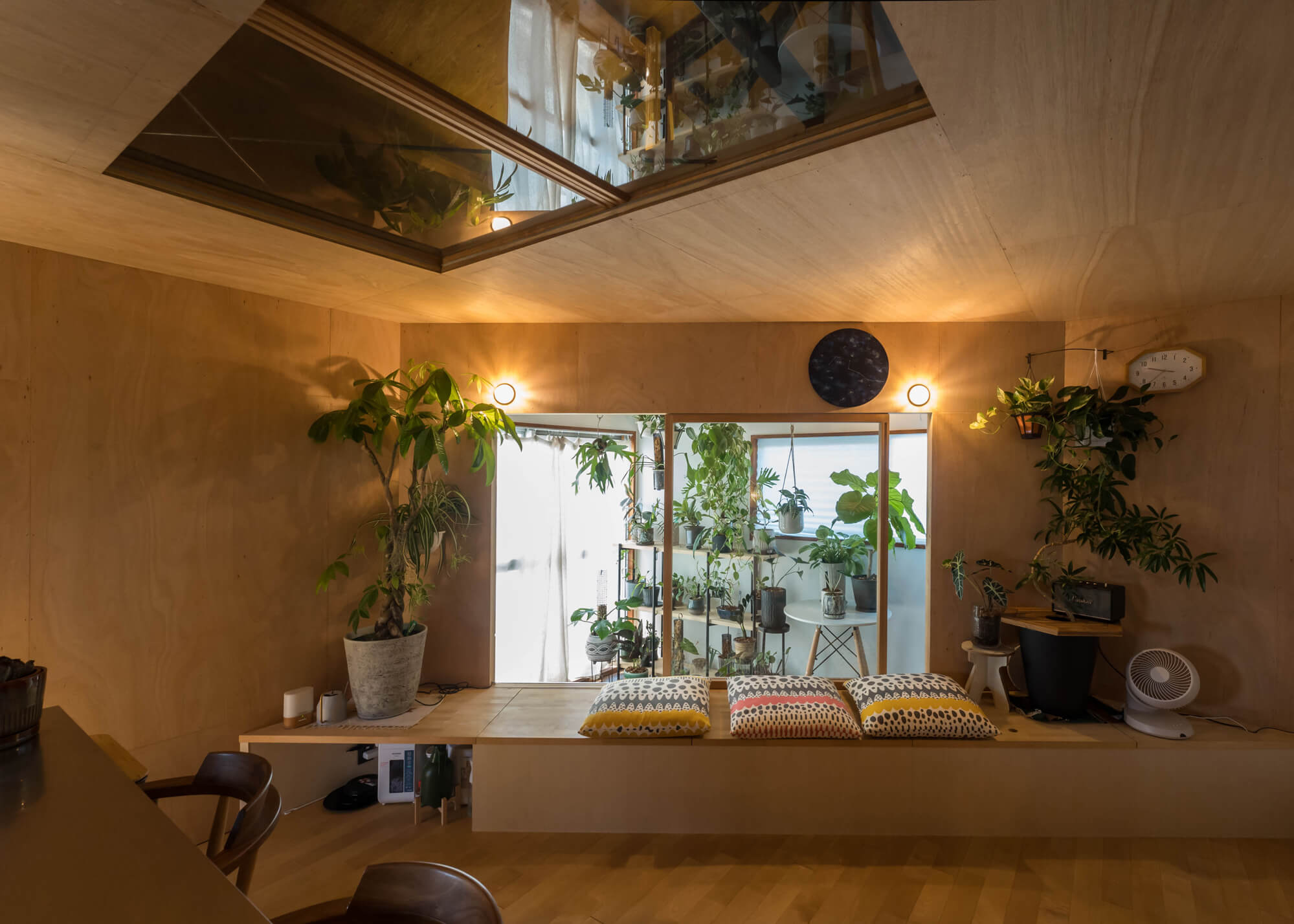
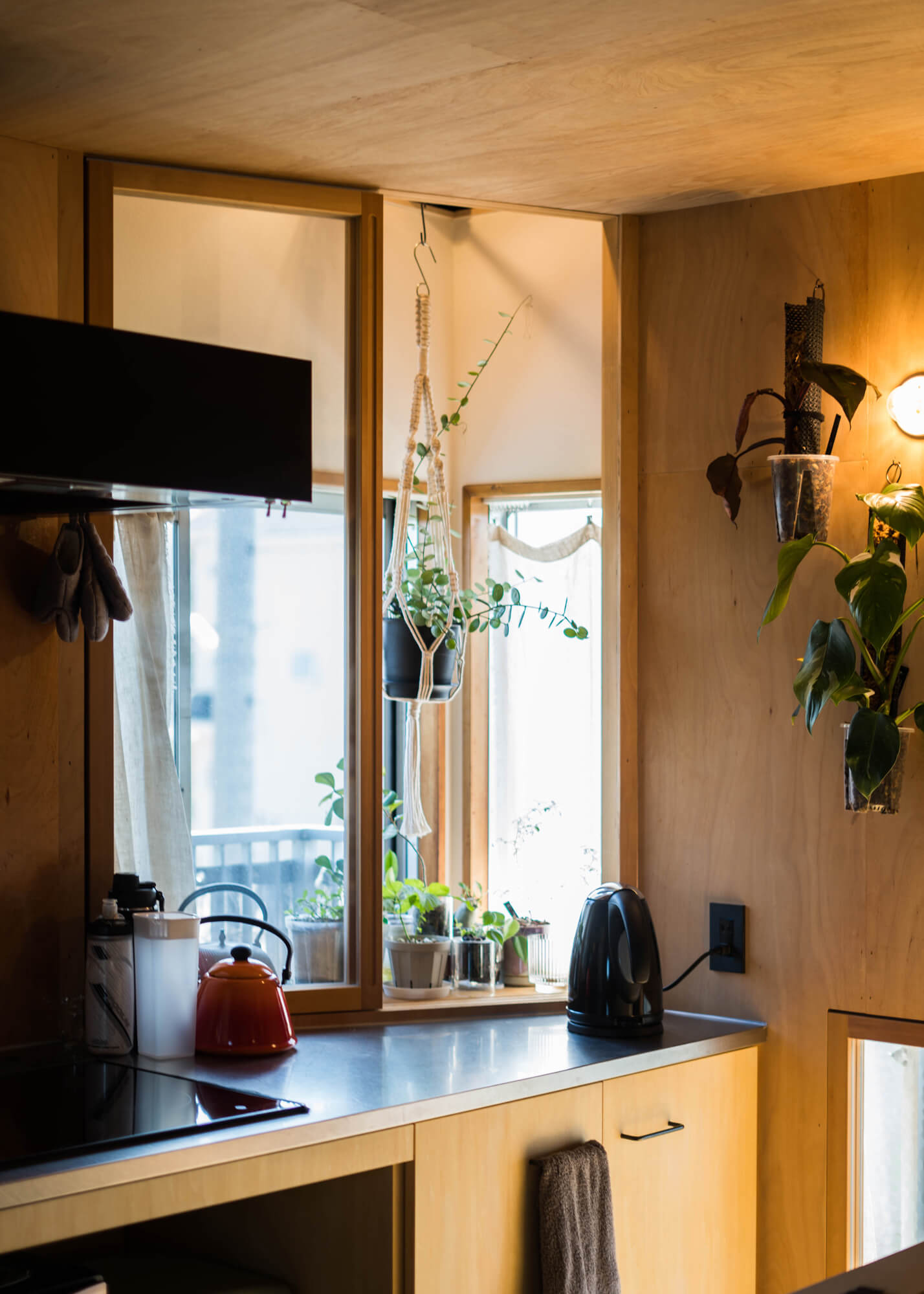
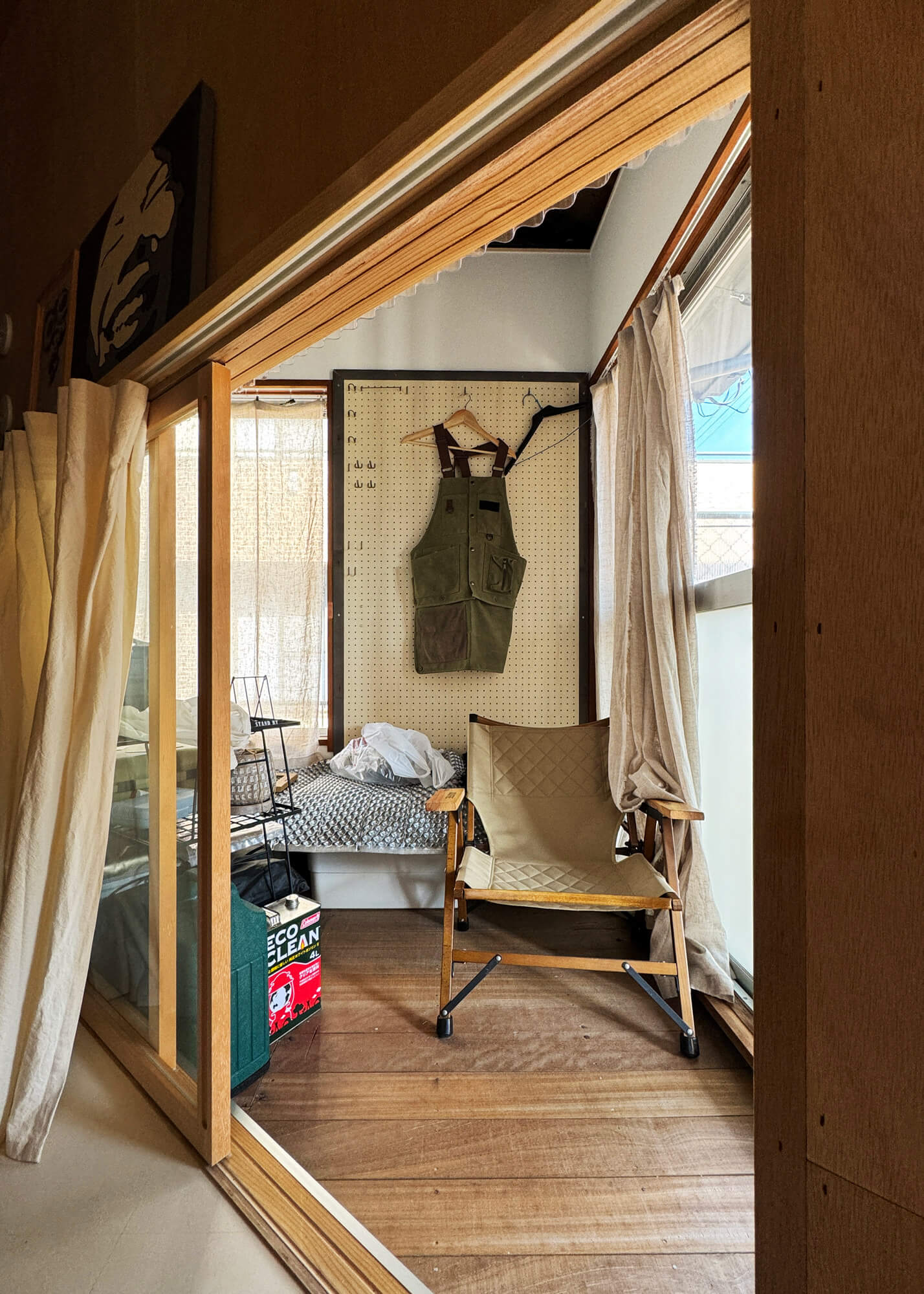
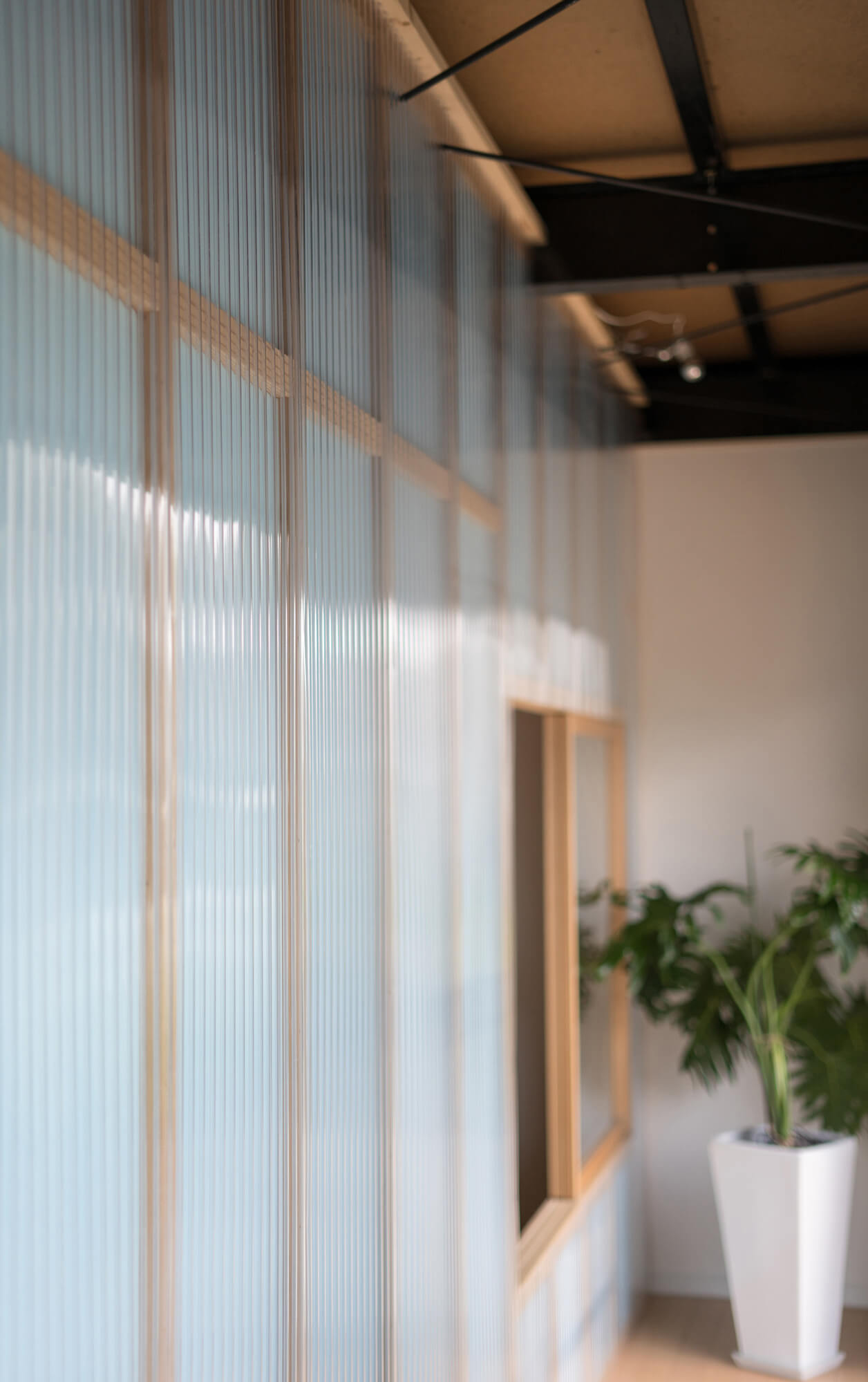
By deliberately shifting this new insulation line slightly away from the original ceiling and exterior wall surfaces, a buffer zone was created between the existing envelope and the new thermal boundary, generating misaligned openings and intermediate spatial layers. Previously, interior and exterior were rigidly separated by a single wall and its openings. Through this operation, the exterior wall is thickened into a spatially inhabitable intermediary zone, transforming the boundary into a softened, layered condition.
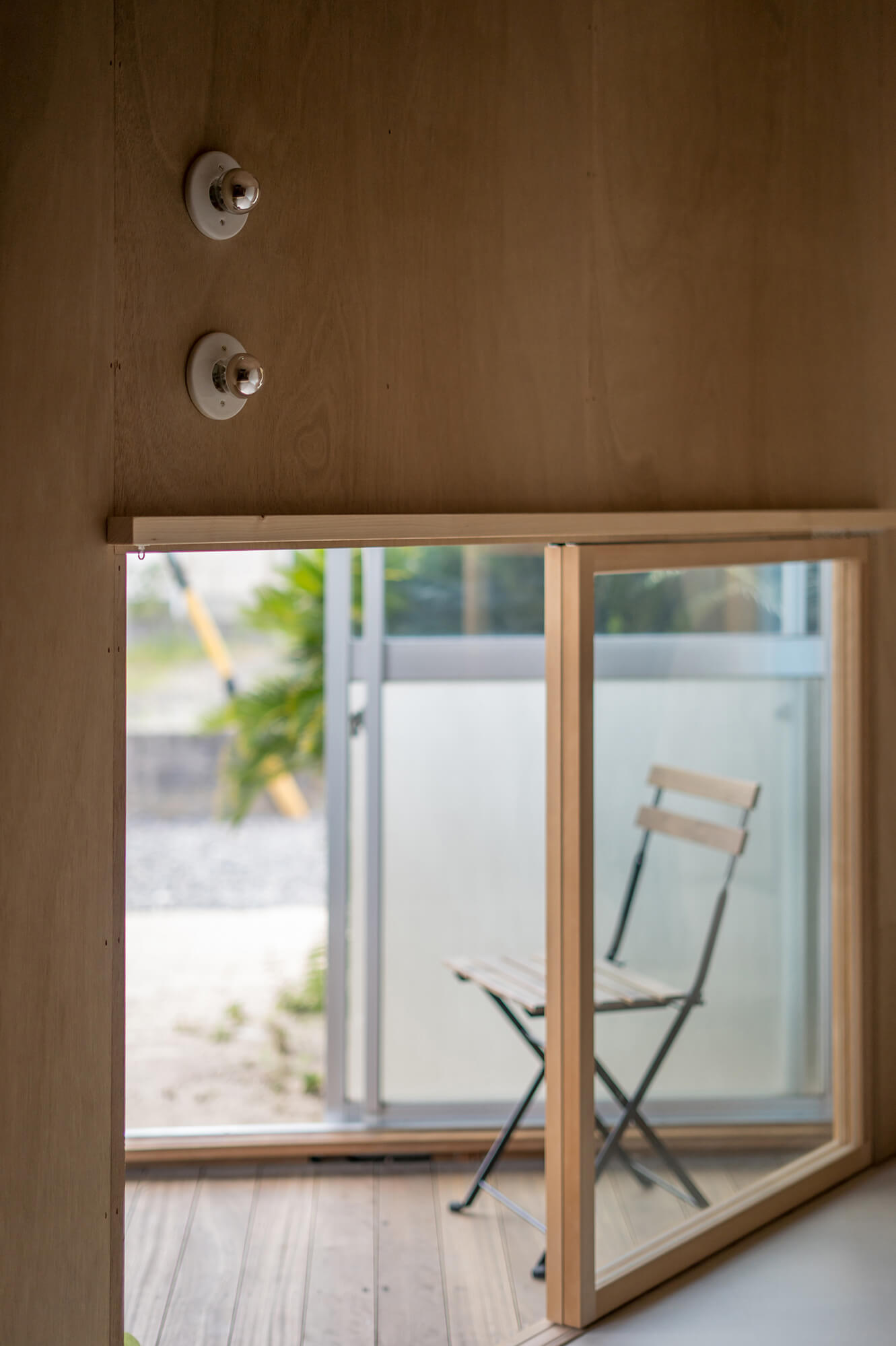
Views through the newly introduced openings reveal fragments of the former interior and glimpses of the surrounding environment through the displaced original openings, allowing different temporal and spatial layers to coexist in parallel.
This renovation reinterprets institutional and structural constraints as design opportunities, proposing an architectural strategy that renews performance while simultaneously reconfiguring spatial relationships—suggesting a sustainable future for Japan’s standardized housing stock.
Originally designed as a single-family dwelling, the house had come to accommodate three generations—grandparents, parents, and grandchildren. As the younger generation grew, the spatial limitations of the original plan became increasingly apparent. The clients therefore requested a transformation into a two-family residence, incorporating multiple kitchens, along with a significant improvement of thermal performance. Standardized certified houses in Japan are structurally and institutionally difficult to modify, as their approval system strictly limits the removal or reconfiguration of walls, floors, and structural elements. While demolition and reconstruction would have provided an easier solution, this project instead sought to explore whether a flexible and sustainable renovation model could be established within the existing certification framework and a limited budget—offering a potential prototype for the vast stock of similar houses across the country.
Rather than altering the primary structure, a new thermal insulation line was inserted inside the existing structural envelope. This strategy allowed performance to be upgraded while maintaining certification compliance.
By deliberately shifting this new insulation line slightly away from the original ceiling and exterior wall surfaces, a buffer zone was created between the existing envelope and the new thermal boundary, generating misaligned openings and intermediate spatial layers. Previously, interior and exterior were rigidly separated by a single wall and its openings. Through this operation, the exterior wall is thickened into a spatially inhabitable intermediary zone, transforming the boundary into a softened, layered condition.
Views through the newly introduced openings reveal fragments of the former interior and glimpses of the surrounding environment through the displaced original openings, allowing different temporal and spatial layers to coexist in parallel.
This renovation reinterprets institutional and structural constraints as design opportunities, proposing an architectural strategy that renews performance while simultaneously reconfiguring spatial relationships—suggesting a sustainable future for Japan’s standardized housing stock.