Restroom OE
public toilet
Kariya Aichi, Japan
public toilet(Wooden)
Construction area:3.56㎡
Floor area:3.56㎡
Structural advice : Workshop
Contractor : Tomoku Construction Co., Ltd.
public toilet(Wooden)
Construction area:3.56㎡
Floor area:3.56㎡
Structural advice : Workshop
Contractor : Tomoku Construction Co., Ltd.
Restroom OE is a small restroom facility attached to a former timber warehouse in Kariya, Aichi Prefecture, Japan.
The project is located within the premises of a lumber company that is still in operation. One of its warehouses had become underused as the scale of the timber business gradually declined. The next-generation owner, who inherited the site, envisioned transforming this space into a multi-tenant complex with several small shops. Restroom OE was planned as a shared restroom to support this future development.
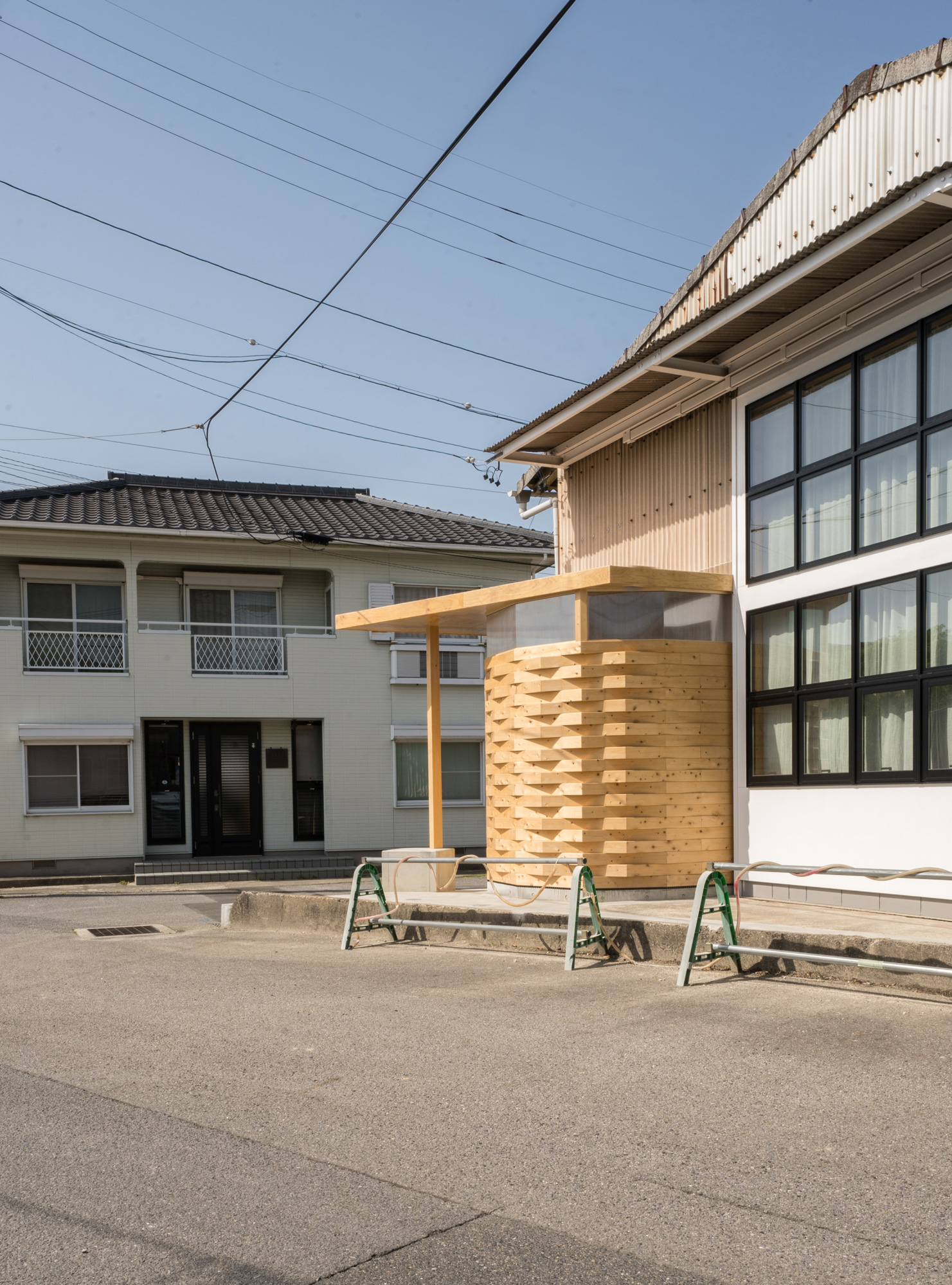
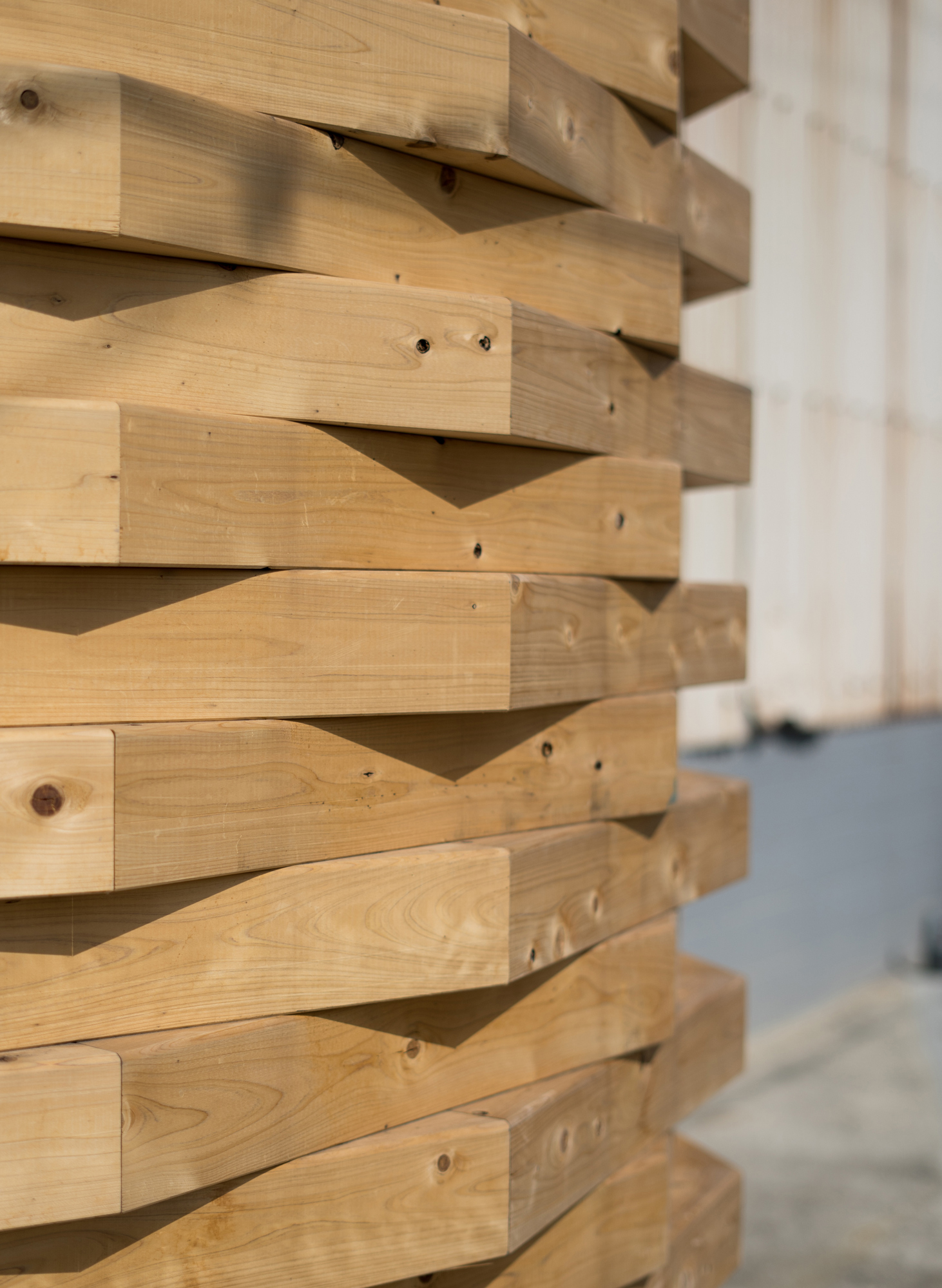
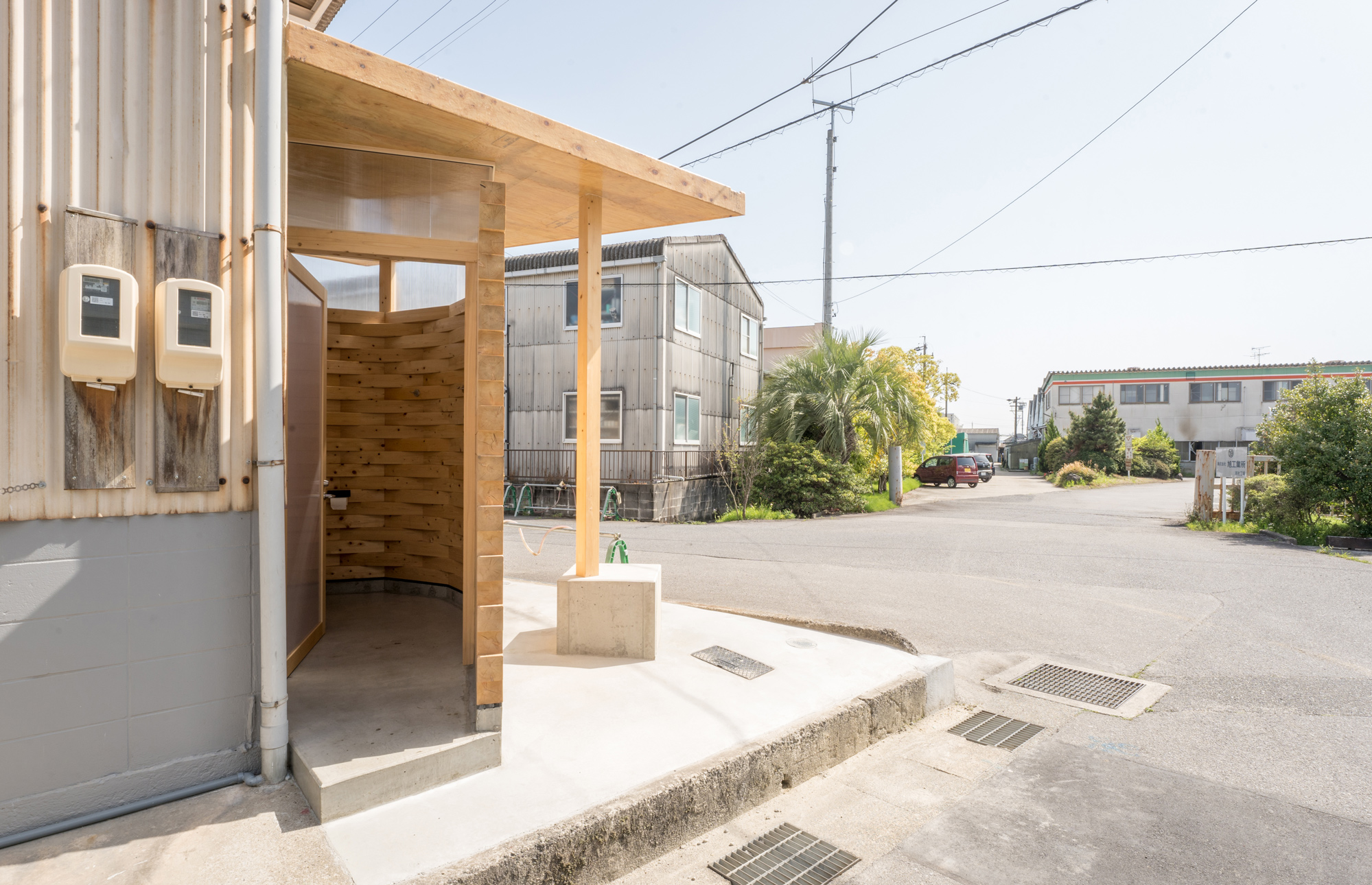
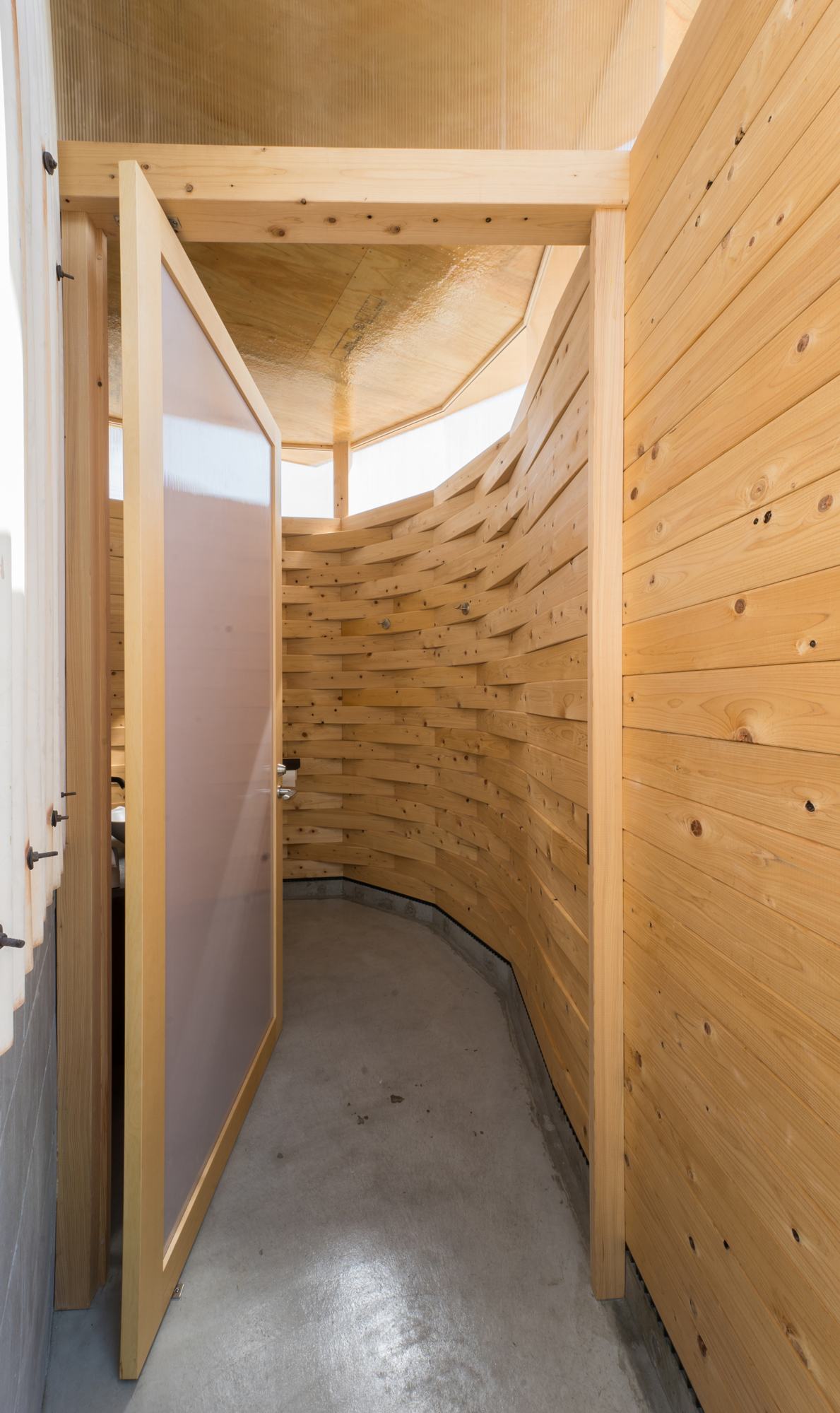
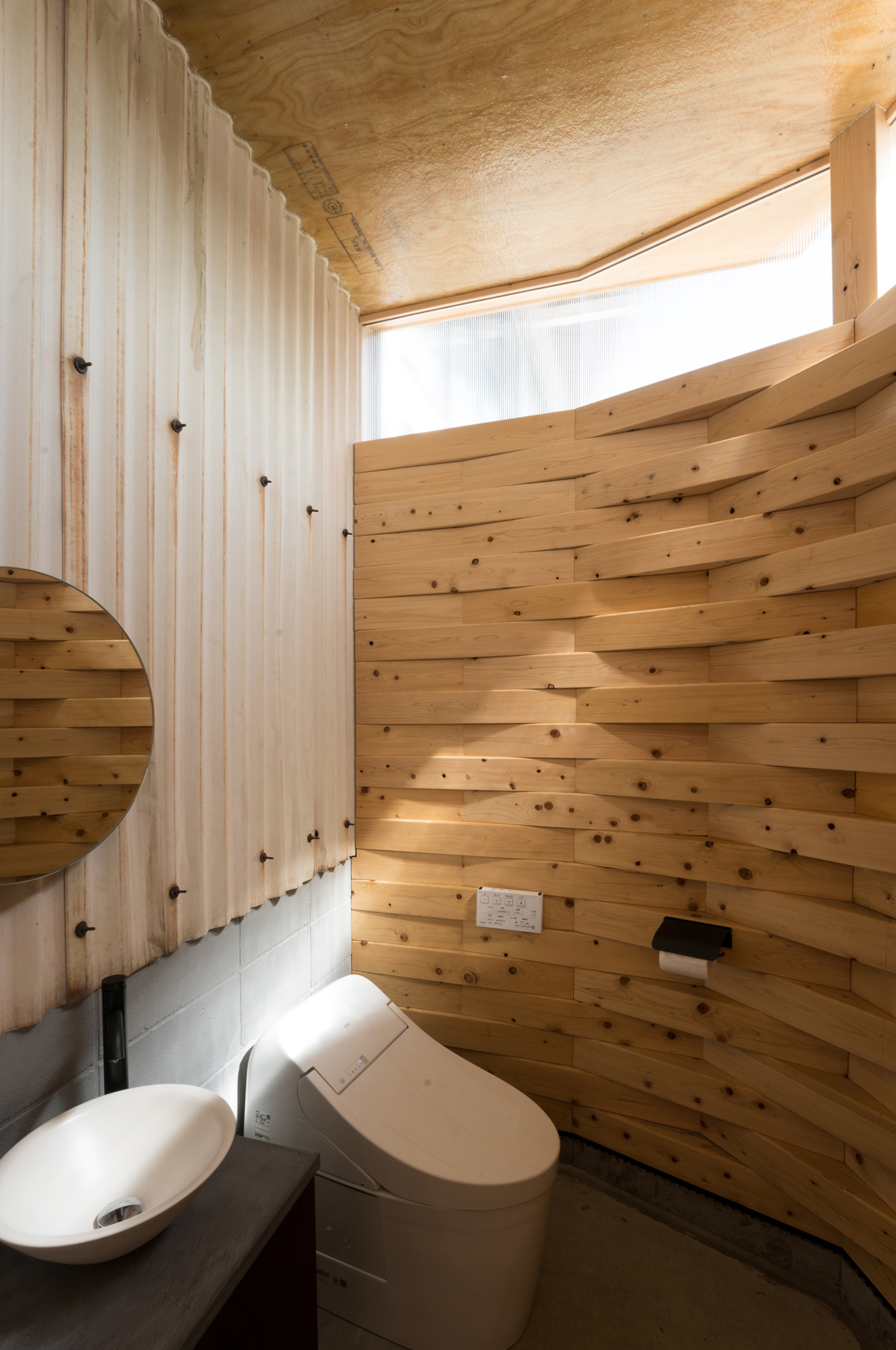
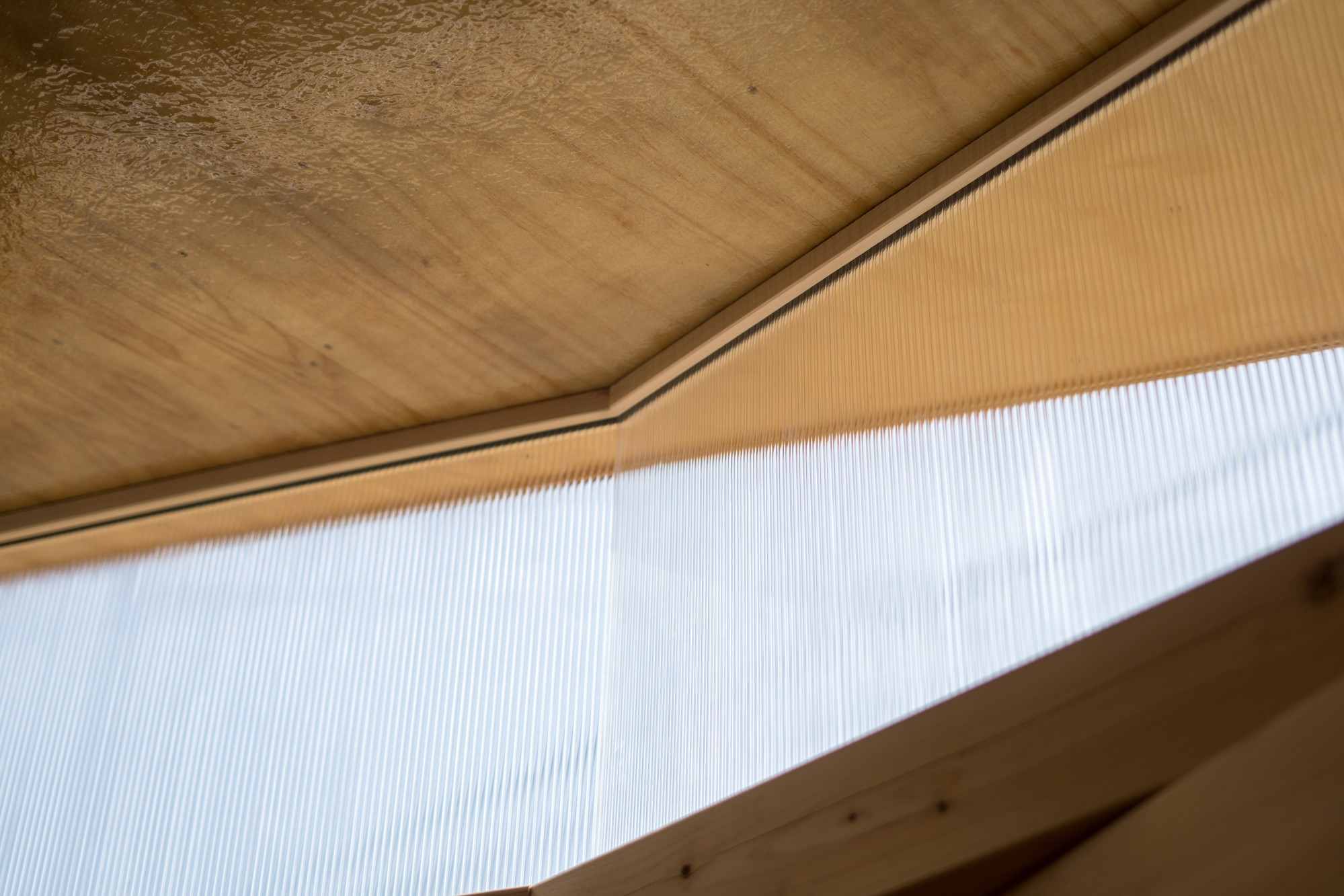
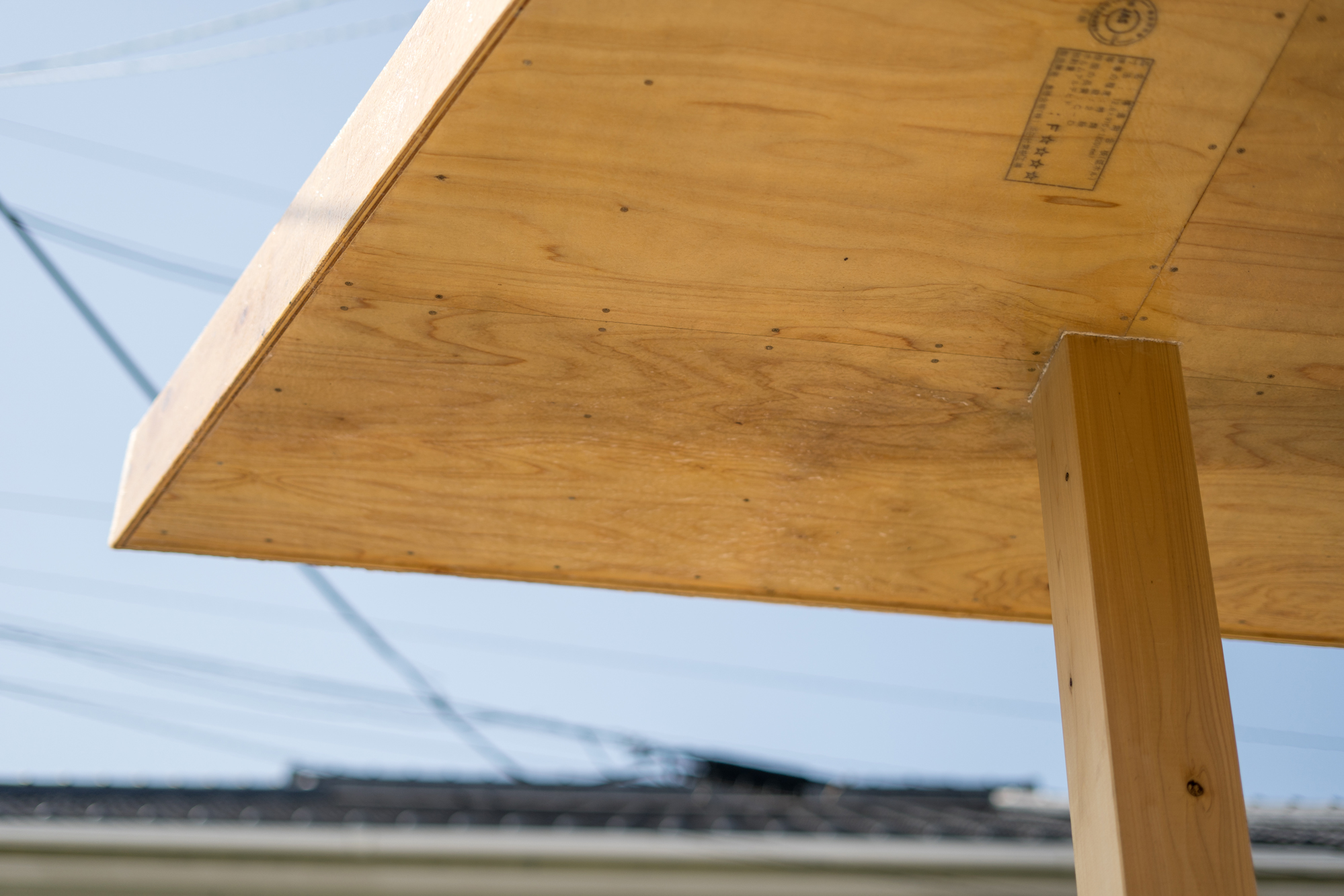
Responding to the site’s history as a timber yard and to the abundance of stock held by the adjacent active lumber business, the project adopts structural wood itself as the primary architectural material. Specifically, 120 mm square solid hinoki (Japanese cypress) members—normally used in post-and-beam construction—were cut into block-like units and stacked to form the enclosure. By subtly rotating each layer in plan, a curved wall surface is generated through simple operations, achieving a geometry that would be costly and complex in conventional timber framing.
The resulting form softly attaches itself to the rational, linear facade of the existing warehouse, almost like a parasitic layer that introduces a new spatial softness to the site. In dialogue with the old wooden warehouse, the project proposes a new way of building with structural solid timber—an approach akin to “timber masonry”—reinterpreting both material and construction logic in the context of adaptive reuse.
The project is located within the premises of a lumber company that is still in operation. One of its warehouses had become underused as the scale of the timber business gradually declined. The next-generation owner, who inherited the site, envisioned transforming this space into a multi-tenant complex with several small shops. Restroom OE was planned as a shared restroom to support this future development.
Responding to the site’s history as a timber yard and to the abundance of stock held by the adjacent active lumber business, the project adopts structural wood itself as the primary architectural material. Specifically, 120 mm square solid hinoki (Japanese cypress) members—normally used in post-and-beam construction—were cut into block-like units and stacked to form the enclosure. By subtly rotating each layer in plan, a curved wall surface is generated through simple operations, achieving a geometry that would be costly and complex in conventional timber framing.
The resulting form softly attaches itself to the rational, linear facade of the existing warehouse, almost like a parasitic layer that introduces a new spatial softness to the site. In dialogue with the old wooden warehouse, the project proposes a new way of building with structural solid timber—an approach akin to “timber masonry”—reinterpreting both material and construction logic in the context of adaptive reuse.