polne 2023
shop
Kariya Aichi, Japan
shop(interior)
Floor area:37.02㎡
Graphic Design : trico
Contractor : Tomoku Co., Ltd.
Photo : 01 03-05 1-1 Architects
02 Takashi Uemura
06-08 Kana Kurata
shop(interior)
Floor area:37.02㎡
Graphic Design : trico
Contractor : Tomoku Co., Ltd.
Photo : 01 03-05 1-1 Architects
02 Takashi Uemura
06-08 Kana Kurata
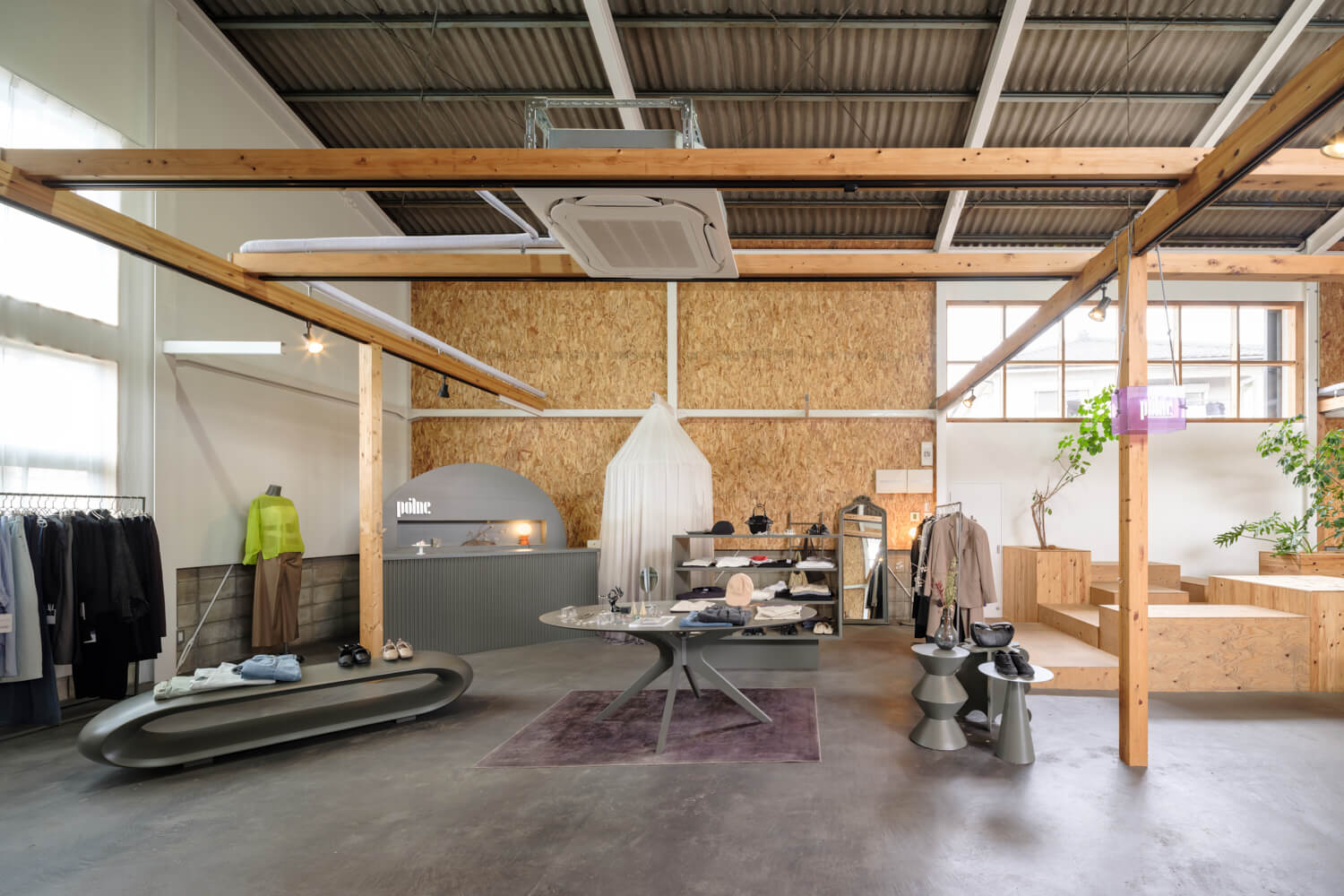
polne is a curated apparel select shop newly inserted within a former timber warehouse in Kariya City, Aichi Prefecture, Japan.
The project occupies one of several warehouses on a site that is still actively operated by a timber company. As timber sales have gradually declined, surplus spaces have emerged, prompting the owner to envision their transformation into a multi-tenant complex. polne is the first realized phase of this long-term conversion.
Under the lease conditions, alterations to the existing warehouse interior were strictly limited. Within this constraint, the project explored how a single shop could establish its own architectural presence and territorial clarity inside a vast, undivided industrial volume.
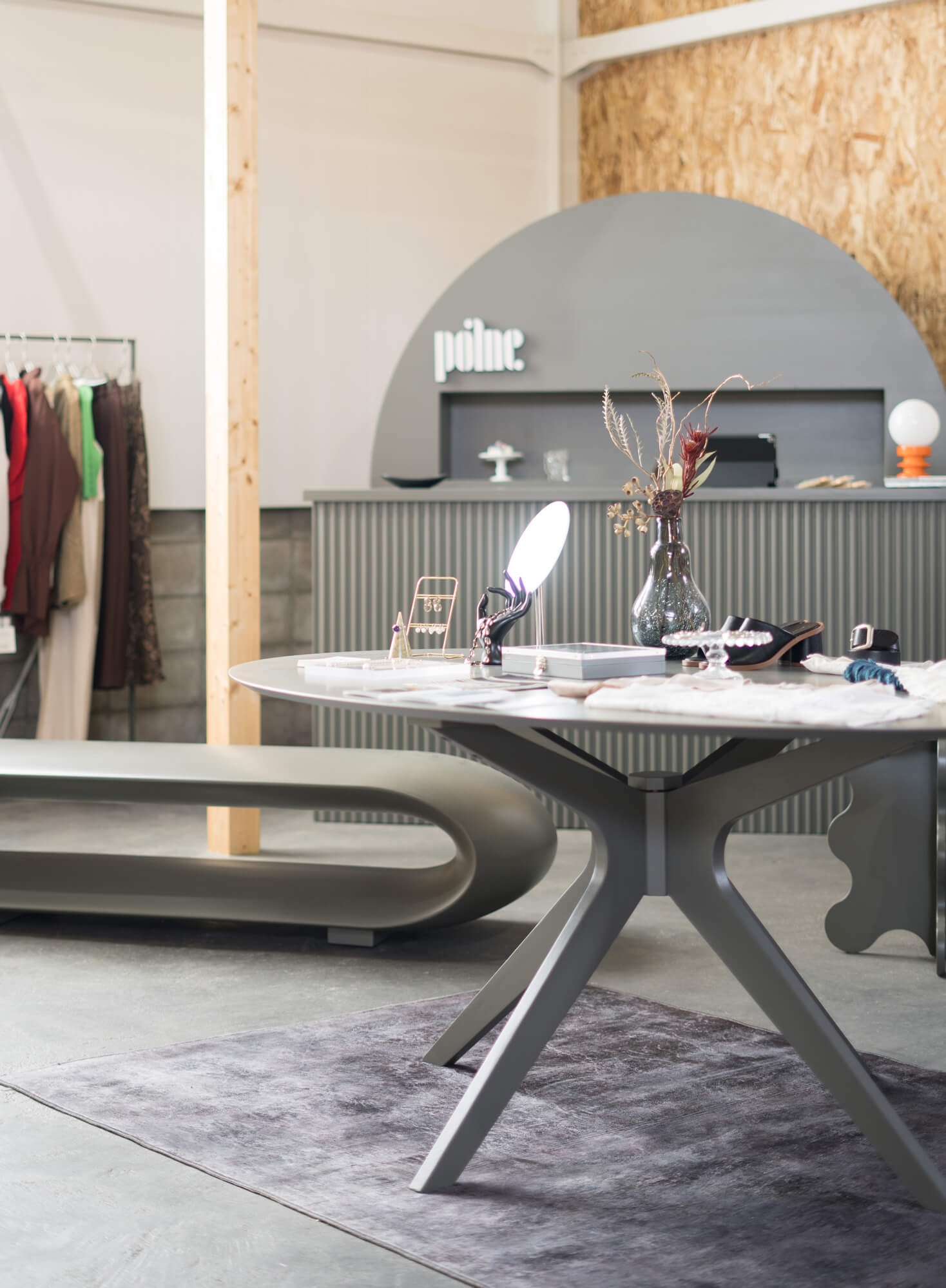
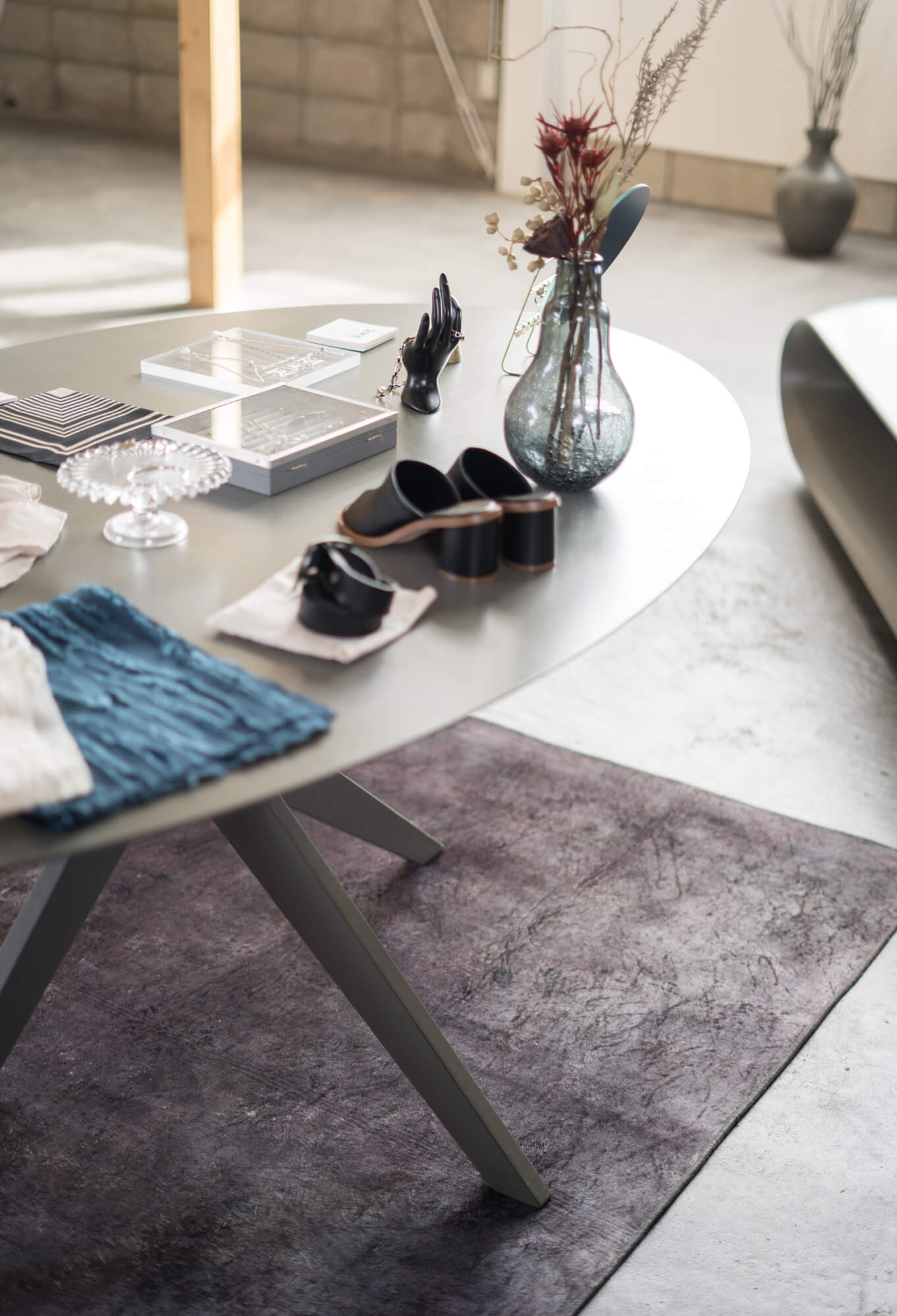
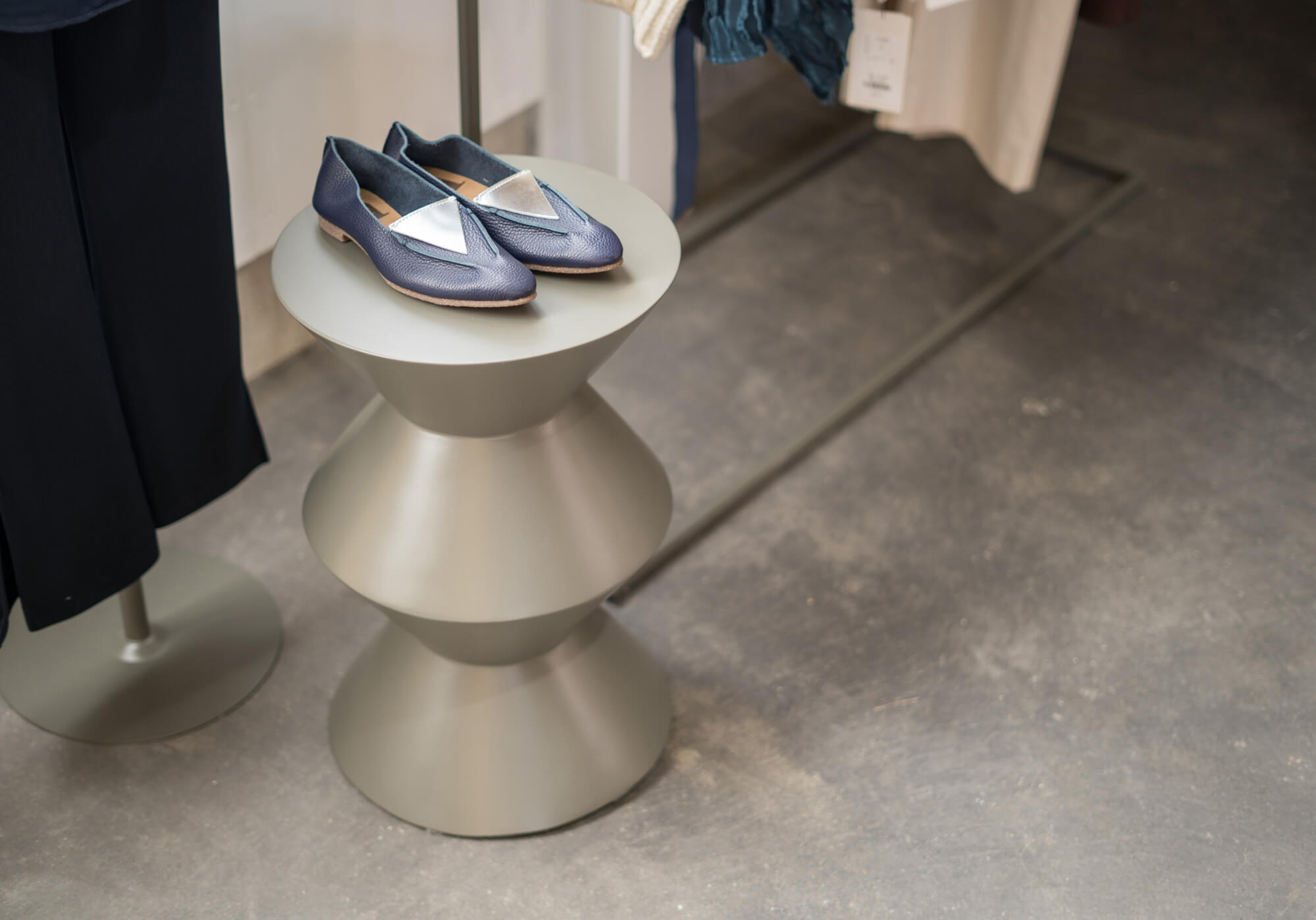
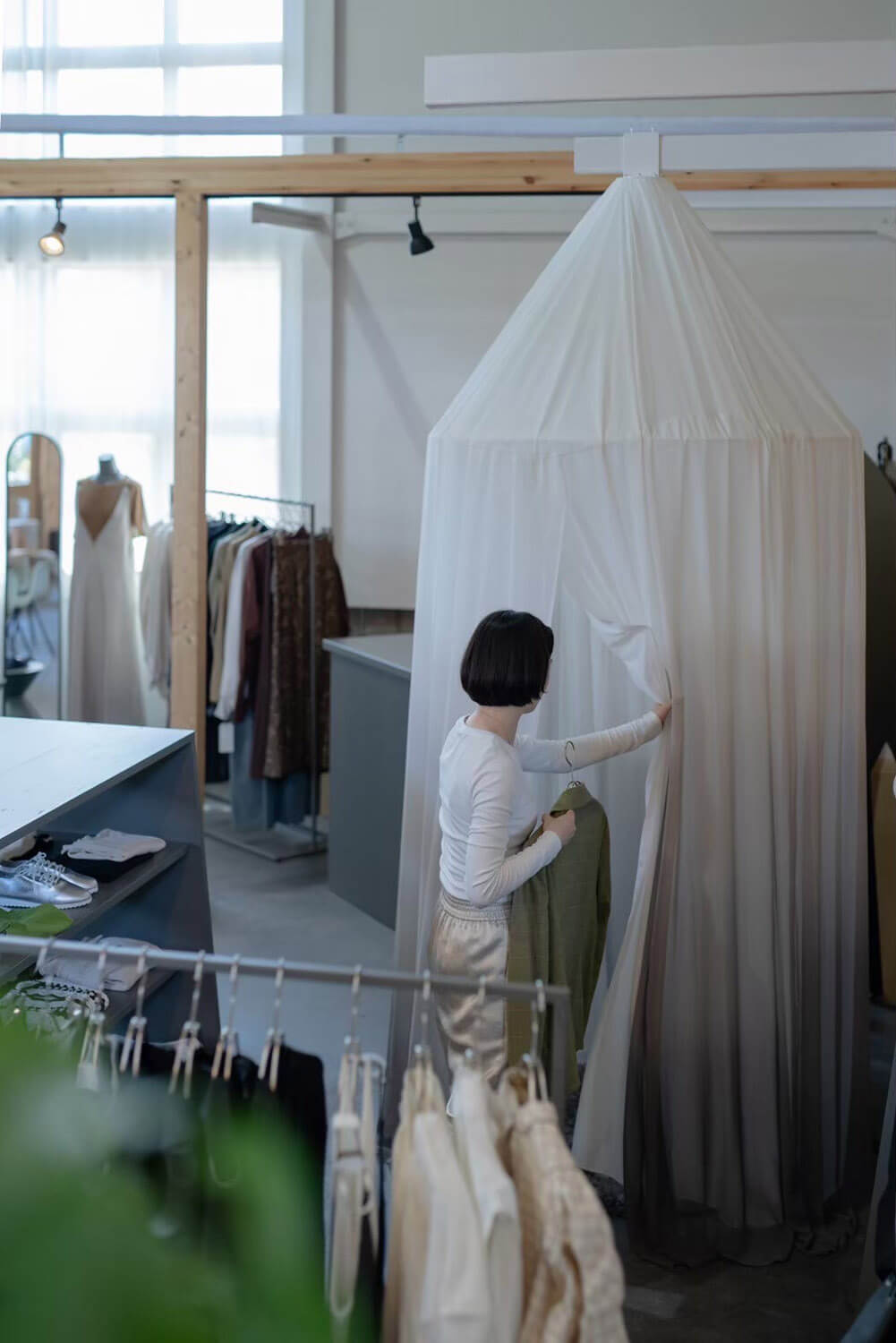
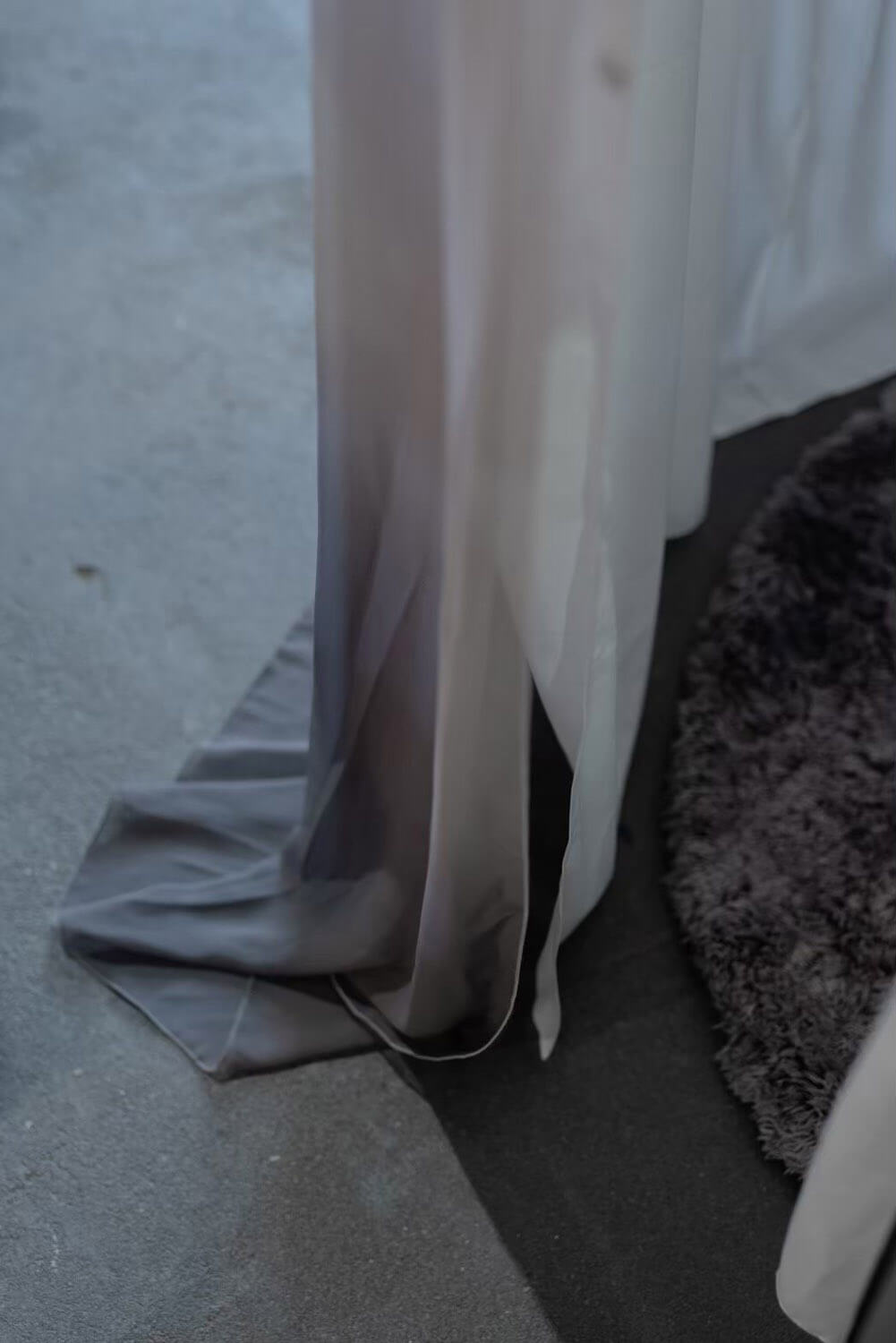
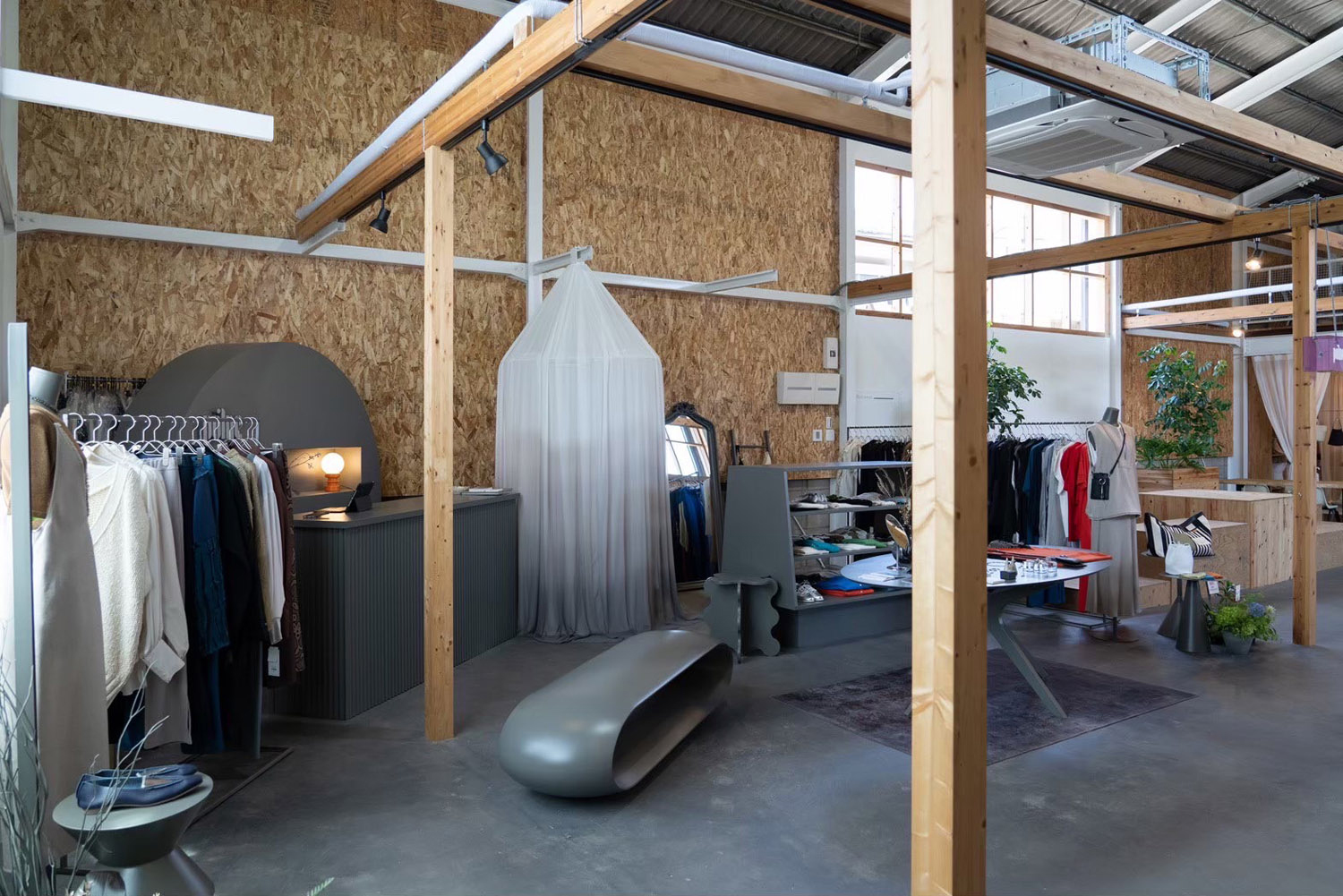
Rather than introducing new partitions, the design focuses on the warehouse floor, which had been coated with a gray protective paint to enhance durability, cleanliness, and structural resilience. According to Vitruvius’ triad of utilitas, firmitas, and venustas, this coating served only utility and strength. The project begins by asking whether beauty could be newly inscribed into this existing industrial surface. All newly introduced fixtures were meticulously color-matched to the exact tone and gloss of the existing gray floor coating. Rising visually from the floor itself, the fixtures form a continuous gray mass, as if absorbed into the original warehouse fabric. Through this chromatic continuity, the floor is no longer a background but becomes an active architectural medium that expands vertically and spatially, giving the impression that the shop’s territory gently permeates the entire warehouse. Carpets and fitting-room fabrics were individually dyed to the same tonal range, reinforcing this spatial coherence and intensifying the immersive effect.
Within this restrained monochromatic field, the diverse and often vividly colored garments are brought into sharp relief. The unified gray environment acts as a neutral architectural backdrop, allowing the merchandise to stand out while maintaining a consistent spatial identity.
Future expansions and layout modifications can be accommodated simply by adhering to the established gray color rule, ensuring long-term flexibility without compromising spatial coherence.
The project occupies one of several warehouses on a site that is still actively operated by a timber company. As timber sales have gradually declined, surplus spaces have emerged, prompting the owner to envision their transformation into a multi-tenant complex. polne is the first realized phase of this long-term conversion.
Under the lease conditions, alterations to the existing warehouse interior were strictly limited. Within this constraint, the project explored how a single shop could establish its own architectural presence and territorial clarity inside a vast, undivided industrial volume.
Rather than introducing new partitions, the design focuses on the warehouse floor, which had been coated with a gray protective paint to enhance durability, cleanliness, and structural resilience. According to Vitruvius’ triad of utilitas, firmitas, and venustas, this coating served only utility and strength. The project begins by asking whether beauty could be newly inscribed into this existing industrial surface. All newly introduced fixtures were meticulously color-matched to the exact tone and gloss of the existing gray floor coating. Rising visually from the floor itself, the fixtures form a continuous gray mass, as if absorbed into the original warehouse fabric. Through this chromatic continuity, the floor is no longer a background but becomes an active architectural medium that expands vertically and spatially, giving the impression that the shop’s territory gently permeates the entire warehouse. Carpets and fitting-room fabrics were individually dyed to the same tonal range, reinforcing this spatial coherence and intensifying the immersive effect.
Within this restrained monochromatic field, the diverse and often vividly colored garments are brought into sharp relief. The unified gray environment acts as a neutral architectural backdrop, allowing the merchandise to stand out while maintaining a consistent spatial identity.
Future expansions and layout modifications can be accommodated simply by adhering to the established gray color rule, ensuring long-term flexibility without compromising spatial coherence.